
Field Service newsletter - 2025 autumn edition
We're thrilled to announce the launch of our customer and field service newsletter, bringing together insights from experts, solutions, and knowledge across various countries.
In times characterized by increased digitalization and customer expectations, manufacturing companies are facing growing challenges. Customers demand faster delivery, lower prices, and higher quality in an intensely competitive market - and at the same time, products are becoming more complex. The integration of electronics into traditional mechanical components has changed the rules of the game. This forces companies to optimize processes and streamline production to meet these expectations.
We have asked our customers about some of their biggest challenges, and the 3 more common are:
PLM (Product lifecycle management) is a system that, among other things, centralizes multiple types of data from several sources. It’s through this centralization that value is created, as problems arise precisely on the silo-based structure in the organization.
The various silos could, for example, be quality planning, BOMs (Bill of materials), configuration management, etc. Each silo contains data and, as we often see, is controlled in an Excel sheet, and is dependent on data from other silos. Therefore, there should be coherence over relevant data, so that there is only one truth.
This is where data centralization comes in and plays an important role. PLM provides, among other things:
Management of all data related to product definition and digital traceability: You can effectively manage the process of developing a product that contains several approval phases. If your engineering team comes up with a draft CAD model for the product, which is not approved either due to design issues or non-compliance with regulations, the model goes back to the design team. Here, PLM plays a large and decisive role by facilitating a structured feedback and audit trail that ensures effective communication and handling of changes without the risk of working on outdated models.
All processes for handling product data: With the help of PLM, your company avoids silo structures by establishing an integrated platform where data is shared across relevant functions and processes. In a silo-based structure, you can’t achieve digital traceability, which can be a direct requirement for the industry. By breaking these silos and creating a common platform for data sharing, you can achieve a more efficient and transparent operation. This means that all data is in one place, always updated and accessible.
An example: A given component in your manufacturing company can be included in several BOMs. If there is a change for this component, you traditionally have to manually update this change in all BOMs. If the data is not the same everywhere, mistakes and misunderstandings can occur later in the production process. Even with a single component, this coherence of data is difficult to achieve - and almost impossible when you have hundreds or thousands of parts, which are also included in several BOMs or are included in several different end products. This is an overly complex management and updating of data that a PLM system can easily solve.
By implementing a PLM solution now your company not only ensures current success but also ensures future growth and stays ready for what’s to come, one step ahead of the competition.
We're thrilled to announce the launch of our customer and field service newsletter, bringing together insights from experts, solutions, and knowledge across various countries.
Discover the 6 key benefits of a PLM system for the manufacturing sector, including improved engineering efficiency, better product quality, cost savings, and more.
Discover the differences, similarities, their roles and functionalities and get access to an infographic comparative.
In product development, information is as critical as the product itself.
We’ll explore nine concrete benefits of re-using your designs across product development cycles and how it supports multiple proposes.
The foundation of PLM (Product Lifecycle Management) is in the ability to manage information across the entire product lifecycle as a strategic approach.
As markets demand more personalization and regional adaptation, it’s important to know how to manage product variants.
Digital Product Passport (DPP) is not just about compliance, starting early can be your competitive advantage

In engineering, manufacturing, and service, a Bill of Materials (BOM) is an essential tool that lists and describes all the components needed for the production, assembly, or repair of products.

Discover how to manage complex product development by integrating mechanical, electrical, and software designs. Learn how PLM and CAD tools can improve collaboration and reduce errors.
How do you move a product smoothly from design to production?
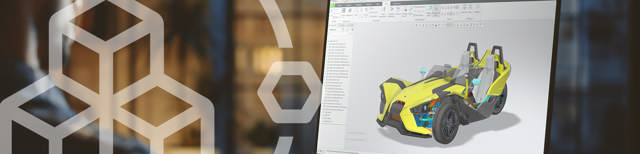
The benefits of modular design.
Ensure you get the right value of your efforts.
Do you know how much time is spent in your company on looking for information? And do you know how often it happens that work is based on the wrong product information?

Balancing today and tomorrow in digital manufacturing

Structural design: A cornerstone of product development

And how to get started.

The challenges facing companies today: Why is PDM alone not enough? Moving from PDM to PLM offers a number of tangible benefits. Find out more in this article!
Does your company use multiple CAD packages across teams and departments? Is there smooth communication between all CAD product designs? How much time does your team spend importing, converting, and correcting CAD files?
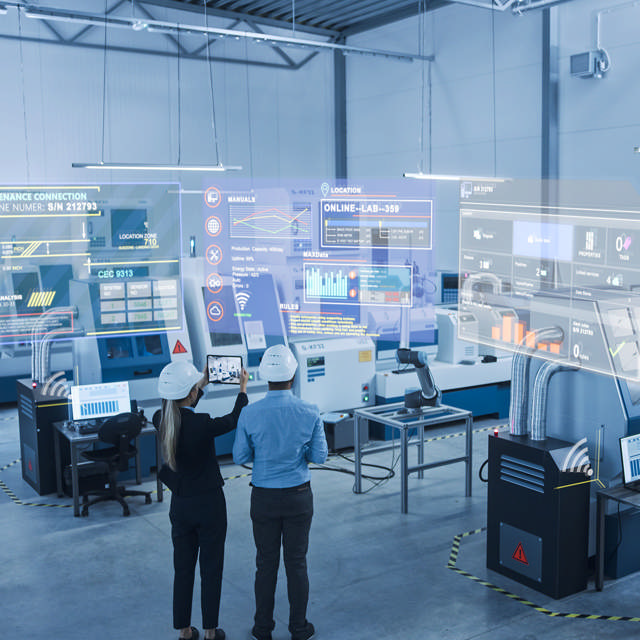
This e-book aims to provide the insights needed to achieve long-term success with Product Lifecycle Management (PLM)

In this e-book, you will learn how an IIoT solution can help your manufacturing department address challenges such as operational efficiency, flexibility, product quality and sustainability

The Golden Triangle of CPQ, PLM, and ERP not only addresses issues related to product configuration and quoting but also drives digital transformation in manufacturing.
For manufacturing companies, both PLM and ERP systems play an important role. However, many companies overlook the benefits they could gain by connecting the two systems and sharing data across the organization’s processes.
Artificial intelligence (AI) is going to affect every aspect of our working life in the coming years within innovation, product development and Product Lifecycle Management (PLM).

Digital business transformation is what we do. Making sure organizations are ready to deliver for the end customer of today and those of tomorrow. Thanks to our industry expertise, we are able to combine speed and quality into your digital transformation journey.