

Product Development
Product development have a huge impact on your organization. Let us help you, with the right software and the right guidance.
In the fast-paced world of engineering and manufacturing, innovation is often seen as the engine of growth. But innovation doesn't always require starting from scratch. Re-using existing design data - whether it’s a 3D model, a sub-assembly, or a complete product configuration - can offer a wide range of strategic, operational, and environmental benefits. And with the right technology, design reuse is not only possible, it's a competitive advantage.
In this article, we’ll explore nine concrete benefits of re-using your designs across product development cycles and how it supports multiple proposes, such as structural engineering, digital manufacturing, product management, and sustainable development.
1. Accelerated time to market
Re-using existing, validated designs, drastically reduces the time required to develop a new product or variant. Engineers can skip repetitive tasks and quickly adapt proven models, enabling a faster response to customer demands or market trends. With a CAD solution, such as PTC Creo, design teams can quickly retrieve and adapt modular components, while adding a Product Lifecycle Management (PLM) solution, such as PTC Windchill, ensures version control and traceability.
2. Improved design quality
Design reuse leverages previously validated models, which often contain the hard-earned lessons of past testing, compliance, and field performance. This increases the probability of achieving a high-quality design the first time around.
A PLM solution ensures that reused designs carry their complete change history and associated documentation, making it easier to understand and trust the performance of reused components.
3. Cost reduction in engineering and manufacturing
Re-using a design not only reduces design hours, it often leads to shared components in manufacturing, which means fewer unique parts, reduced tooling costs, and streamlined inventory. Companies that design for reusability can reduce part counts, leading to significant savings across procurement and logistics.
4. Enhanced collaboration across teams
When teams across departments - engineering, product management, manufacturing - work from a common, unified repository of reusable components, collaboration becomes simpler and more effective. PLM software facilitates this by managing a central digital thread for product data, accessible by all stakeholders that need that information.
5. More accurate and efficient BOM management
Re-used components tend to be better documented and connected to accurate Bills of Materials (BOM). This is critical for production planning, compliance, and service documentation. This combined with a Product Lifecycle Management solution, ensures that each instance of a reusable component is correctly referenced, with up-to-date data and change tracking.
6. Simplified approach to modular design
Design reuse is at the heart of modular design strategies, which allow companies to mix-and-match components to meet diverse customer needs without redesigning every element. This modular approach promotes scalability and simplifies product line expansion.
7. Support for sustainable product development
Using existing designs reduces the need for additional prototypes, tooling, and redundant development cycles - all of which consume materials, energy, and time. Moreover, reused components often come with established environmental data, making it easier to evaluate and optimize the carbon footprint of new products.
8. Easier compliance and risk management
Reused component designs that have already passed certification or regulatory checks lower the risk of non-compliance. For industries with strict safety or quality standards (e.g., aerospace, automotive, or medical devices), this is a major advantage. A PLM solution provides full traceability, so compliance documentation can be linked directly to each part.
9. A strategic lever for Industry 5.0
Industry 5.0 puts human creativity and innovation at the centre of manufacturing while integrating advanced digital tools. By removing repetitive design tasks, engineers can focus more on high-value activities like user-centric design, and sustainable innovation.
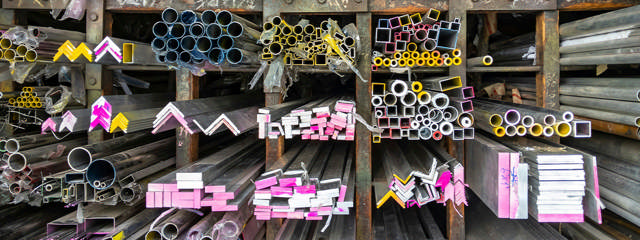
In engineering, manufacturing, and service, a Bill of Materials (BOM) is an essential tool that lists and describes all the components needed for the production, assembly, or repair of products.
Whether you're working in 3D design engineering, structural analysis, bill of materials management, or digital manufacturing, reusing designs gives you a head start in every product development cycle.
In a market where speed, sustainability, and precision matter more than ever, design reuse isn’t just a technical choice - it’s a strategic imperative.
Product development have a huge impact on your organization. Let us help you, with the right software and the right guidance.
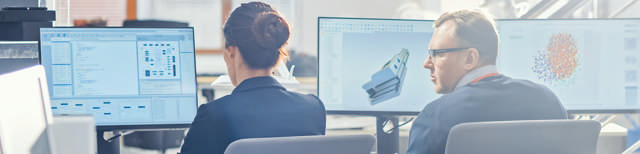
Structural design: A cornerstone of product development

And how to get started.

Discover how 9altitudes boosted TOBROCO-GIANT's success in the agriculture and construction sectors. Read the full case study!
Does your company use multiple CAD packages across teams and departments? Is there smooth communication between all CAD product designs? How much time does your team spend importing, converting, and correcting CAD files?
Join us and discover how to stay ahead in an era defined by product transparency.
Discover how reusing legacy CAD designs increases efficiency, reduces development time, and saves costs with tools like PTC Creo and Windchill.
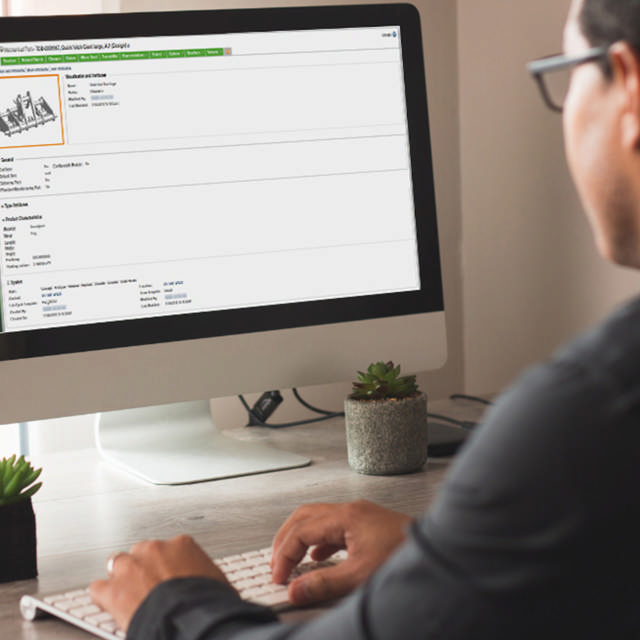
Discover how to manage complex product development by integrating mechanical, electrical, and software designs. Learn how PLM and CAD tools can improve collaboration and reduce errors.
Ensure you get the right value of your efforts.
Do you know how much time is spent in your company on looking for information? And do you know how often it happens that work is based on the wrong product information?
We're thrilled to announce the launch of our customer and field service newsletter, bringing together insights from experts, solutions, and knowledge across various countries.

Digital business transformation is what we do. Making sure organizations are ready to deliver for the end customer of today and those of tomorrow. Thanks to our industry expertise, we are able to combine speed and quality into your digital transformation journey.