
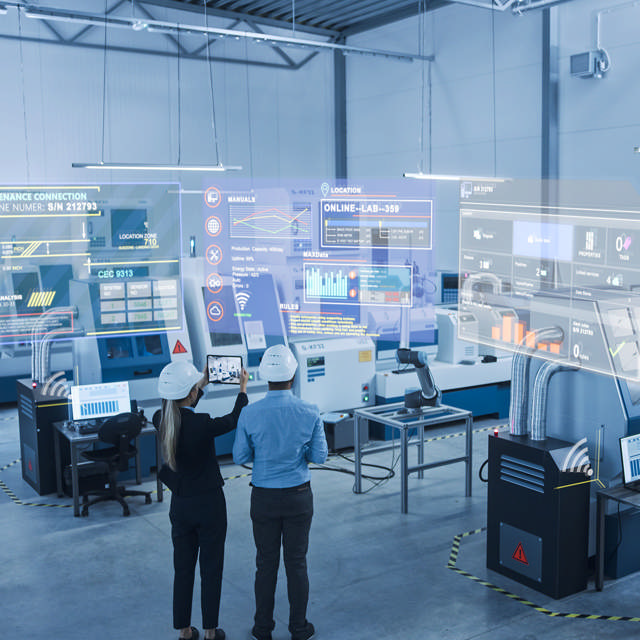
From concept to completion: the ultimate guide to Product Lifecycle Management
This e-book aims to provide the insights needed to achieve long-term success with Product Lifecycle Management (PLM)
We often hear that "data is the new oil," and that's not entirely wrong. Modern manufacturing companies working towards Industry 4.0 must prepare to process a significant volume of data from sensors and robots in their production equipment. Thanks to real-time analysis of production and inventory processes, you can optimize production, reduce downtime, and predict maintenance needs.
But this requires the application of technologies such as IIoT, Artificial Intelligence, and further automation, and the challenge of building a ‘Big Data’ strategy must be addressed.
The combination of PLM (Product Lifecycle Management) and ERP (Enterprise Resource Planning) forms the backbone of your business and automates production processes, supply chains, and product lifecycle management. Both tools focus on sharing knowledge and data about a product.
However, you can't limit PLM to just a tool used in the design and development phase. It is, in fact, an essential part of the "digital thread" concerning technical, product-related data and plays a much broader, cross-functional role. A PLM solution provides a comprehensive overview of product data at every stage of the product lifecycle, including its history. This solution plays a larger role than merely passing data to ERP once production begins. The systems should complement each other, as some data inherently belongs to the PLM system, while other data belongs to the ERP system.
It’s crucial not to let the two systems operate in isolation; otherwise, you risk business data being scattered across different systems. This causes the loss of synergies and optimizations that come from the entire company working with the same up-to-date data.
As we move toward more advanced data management, it becomes increasingly valuable to examine the interfaces between PLM and ERP. A concrete example is the interface between the EBOM (Engineering Bill of Materials) and MBOM (Manufacturing Bill of Materials). A PLM solution is capable of converting the EBOM into an MBOM before it is transferred to the ERP system.
To do this efficiently and error-free, it’s essential that both systems "speak the same language." For this, a seamless interface is crucial. Unfortunately, this step is often overlooked. This is a missed opportunity, because it’s exactly here where companies can gain the most benefit from the cooperation between both systems.
In short, most manufacturing companies already have excellent data and systems. Still, even more synergies and optimizations can be achieved by connecting the right data in the right way. This leads to more efficient business operations and a competitive advantage.
Read the e-book and get inspired
Integrating your CAD solution with your ERP system can be a major task with many obstacles. The downside is that even if you succeed with the integration, it may not be the solution that adds the most value to your organization.
We’ve gathered the best insights in one article to ensure your integrations add value across the entire value chain.
This e-book aims to provide the insights needed to achieve long-term success with Product Lifecycle Management (PLM)
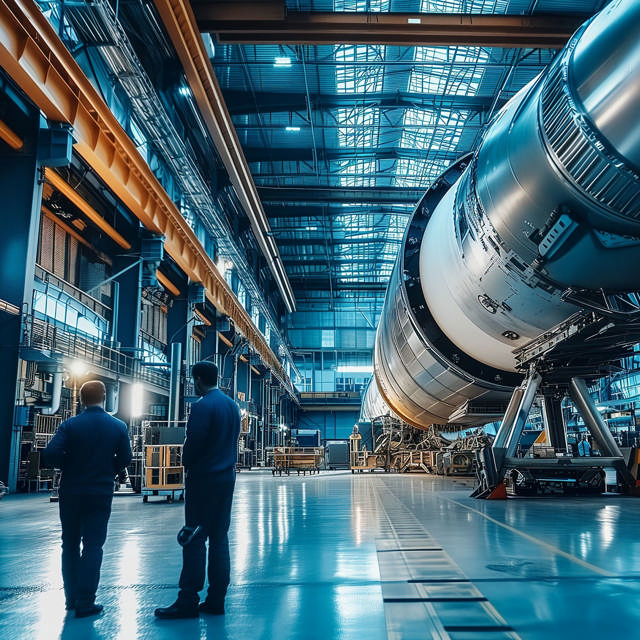
In this e-book, you will learn how an IIoT solution can help your manufacturing department address challenges such as operational efficiency, flexibility, product quality and sustainability
Companies worldwide are acting swiftly in setting up new digital business strategies. How about your company? Are you following along?
This guide helps you determine which CAD solution to choose based on your company's needs and goals.
Learn how CAD chaos impacts manufacturing efficiency, innovation, and costs. Discover the benefits of consolidating on a single CAD system to streamline processes and avoid costly errors.



We are excited to announce that Integral Innovations Spain is rebranding to 9altitudes.
We are happy to announce the appointment of Niels Stenfeldt as the new Chief Executive Officer of 9altitudes, effective immediately.

Digital business transformation is what we do. Making sure organizations are ready to deliver for the end customer of today and those of tomorrow. Thanks to our industry expertise, we are able to combine speed and quality into your digital transformation journey.