
Field Service newsletter - 2025 autumn edition
We're thrilled to announce the launch of our customer and field service newsletter, bringing together insights from experts, solutions, and knowledge across various countries.
PLM is not another software or a tool restricted to engineering. It is a structured, integrated approach that governs all the data and processes involved in the creation, development, production, and service of a product, from its initial concept to its retirement from the market.
At its core, a PLM system connects several essential domains:
While many still associate PLM with CAD file management or BOMs, the scope is much broader. PLM systems establish a central digital backbone where product-related information is created, stored, updated, and consumed by multiple stakeholders: engineering, manufacturing, quality, procurement, compliance, service, and more.
This digital continuity ensures that decisions made early in the design phase, about materials, suppliers, or compliance, are visible and traceable downstream, reducing errors, rework, and time-to-market.
By implementing PLM, companies aim to break down information silos and create a unified, structured, and reusable data model. The benefits are both operational and strategic.
Operationally, PLM improves productivity by reducing time spent searching for information, avoiding duplication of work, and ensuring that teams work with up-to-date, validated data. It helps enforce standards and processes, increases traceability, and reduces costly errors in product development and production.
Strategically, PLM provides a foundation for innovation. It supports the management of complex product portfolios, shortens development cycles, enables more efficient collaboration with suppliers, and helps organizations adapt more quickly to market changes or regulatory requirements.
In sectors like aerospace, automotive, electronics, and medical devices, PLM is also fundamental for maintaining compliance with international standards.
A key aspect to understand is that PLM is not a short-term project, it's a long-term infrastructure. Once deployed, a PLM system becomes a central nervous system for product-related decisions. It evolves with the company, supporting new product lines, new markets, and increasingly complex business models.
With the rise of Industry 4.0 and 5.0, PLM is also expanding its role by integrating with digital twins, additive manufacturing processes, and AI-driven decision-making. PLM can feed closed-loop engineering processes.
Product Lifecycle Management is not just about managing data, it’s about managing knowledge. It’s a system of control, but also of innovation. By establishing a consistent structure for how product-related decisions are made, tracked, and communicated, PLM allows companies to scale their operations without losing agility, quality, or visibility.
For companies developing complex, multi-disciplinary products, PLM is no longer optional, it is a prerequisite for digital transformation.
We're thrilled to announce the launch of our customer and field service newsletter, bringing together insights from experts, solutions, and knowledge across various countries.
A PLM system let you efficiently handle data related to your product, through its whole lifecycle. Learn more about the impact it can have.
Discover the 6 key benefits of a PLM system for the manufacturing sector, including improved engineering efficiency, better product quality, cost savings, and more.
Discover the differences, similarities, their roles and functionalities and get access to an infographic comparative.
In product development, information is as critical as the product itself.
We’ll explore nine concrete benefits of re-using your designs across product development cycles and how it supports multiple proposes.
As markets demand more personalization and regional adaptation, it’s important to know how to manage product variants.
Digital Product Passport (DPP) is not just about compliance, starting early can be your competitive advantage

In engineering, manufacturing, and service, a Bill of Materials (BOM) is an essential tool that lists and describes all the components needed for the production, assembly, or repair of products.
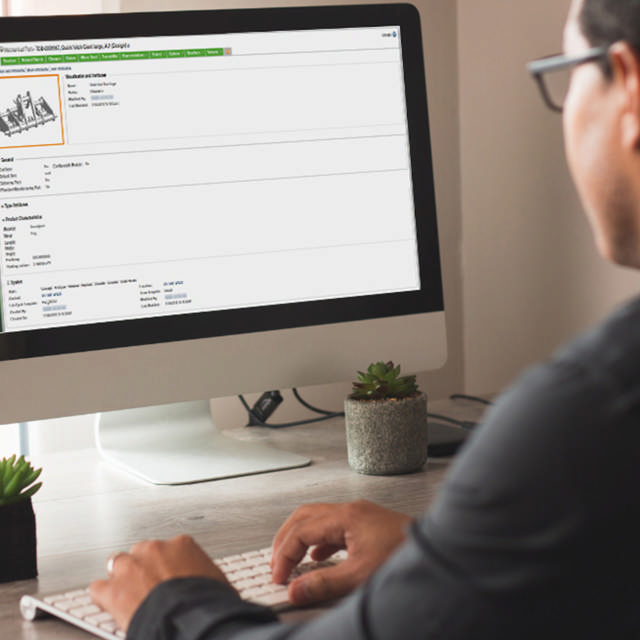
Discover how to manage complex product development by integrating mechanical, electrical, and software designs. Learn how PLM and CAD tools can improve collaboration and reduce errors.
How do you move a product smoothly from design to production?

The benefits of modular design.
Ensure you get the right value of your efforts.
Do you know how much time is spent in your company on looking for information? And do you know how often it happens that work is based on the wrong product information?

Balancing today and tomorrow in digital manufacturing

Structural design: A cornerstone of product development

And how to get started.

The challenges facing companies today: Why is PDM alone not enough? Moving from PDM to PLM offers a number of tangible benefits. Find out more in this article!
Does your company use multiple CAD packages across teams and departments? Is there smooth communication between all CAD product designs? How much time does your team spend importing, converting, and correcting CAD files?
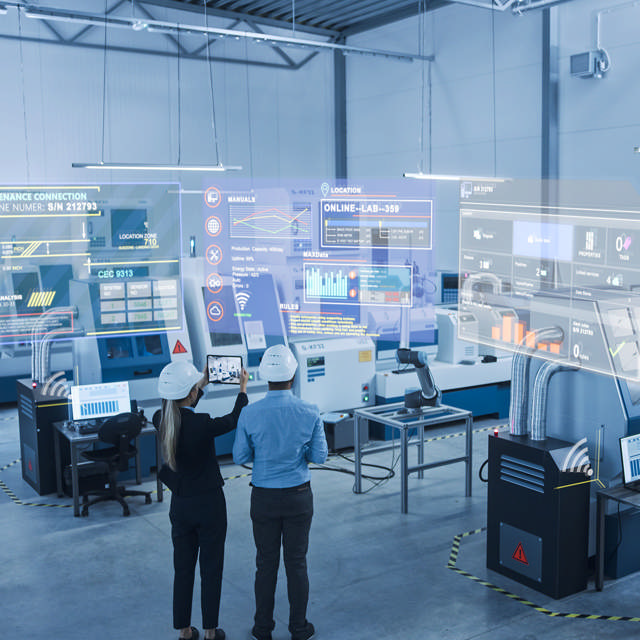
This e-book aims to provide the insights needed to achieve long-term success with Product Lifecycle Management (PLM)

In this e-book, you will learn how an IIoT solution can help your manufacturing department address challenges such as operational efficiency, flexibility, product quality and sustainability

The Golden Triangle of CPQ, PLM, and ERP not only addresses issues related to product configuration and quoting but also drives digital transformation in manufacturing.
For manufacturing companies, both PLM and ERP systems play an important role. However, many companies overlook the benefits they could gain by connecting the two systems and sharing data across the organization’s processes.
Artificial intelligence (AI) is going to affect every aspect of our working life in the coming years within innovation, product development and Product Lifecycle Management (PLM).

Digital business transformation is what we do. Making sure organizations are ready to deliver for the end customer of today and those of tomorrow. Thanks to our industry expertise, we are able to combine speed and quality into your digital transformation journey.