

The must-read whitepaper for choosing Field Service Management software
In this white paper, we look at what you can expect from a field service management solution, which features are important, and how to approach the search.
You’re under pressure. Not just to hit your KPIs, but to meet evolving sustainability goals, satisfy regulators, reduce costs, and keep operations running. Sound familiar? If you manage field service in a manufacturing environment, you know how hard it is to balance all of that. The good news? Field service is not just a cost center. With the right tools in place, it becomes a powerful driver of sustainability.
Here’s 5 takeaways on how a smarter approach to Field Service can help you reduce waste, cut emissions, and turn sustainability goals into day-to-day results.
Field Service technicians often travel between plants, warehouses, or remote sites. Every mile driven adds up in fuel, emissions, and wear on your vehicles. Microsoft Dynamics 365 Field Service, uses AI to schedule jobs based on location, technician skills, and real-time conditions. This minimizes unnecessary travel and reduces your environmental footprint.
Results:
Inspection reports, safety checklists, and work orders often pile up. Many technicians drive around with vans full of printed documents. These papers can easily get damaged, disorganized, or lost in the process. This kind of clutter slows down your workflow and increases the chances of mistakes or missing information. Switching to digital workflows allows technicians to manage everything from a mobile device. It eliminates paper waste, improves data accuracy, and makes documentation faster and more secure. The result is a cleaner process that benefits both your operations and the environment.
Results:
Expired or unused spare parts are more than a financial loss. They represent wasted materials and unnecessary energy used for storage and production. With real-time inventory management, you get visibility into part usage, avoid overstocking, and stay aligned with actual service needs. This leads to more efficient, low-waste operations. Field Service's tight integration with inventory and ERP systems (like Dynamics 365 Business Central or Finance) helps manufacturers track parts consumption in real time.
Results:
Reacting too late or replacing too soon can hurt both your bottom line and your sustainability targets. By integrating Dynamics 365 Field Service with IoT sensors, you can detect potential failures before they happen. Predictive maintenance keeps machines running efficiently, reduces emergency repairs, and extends asset life. All of this contributes to less waste and smarter resource use.
Results:
Sustainability goals only work if your people apply them daily. With Field Service, you can provide technicians with checklists and guidance that promote responsible practices. This includes safe disposal of materials, energy-conscious equipment handling, and reduced waste during service calls. Sustainability becomes part of every job, not just a policy.
Results:
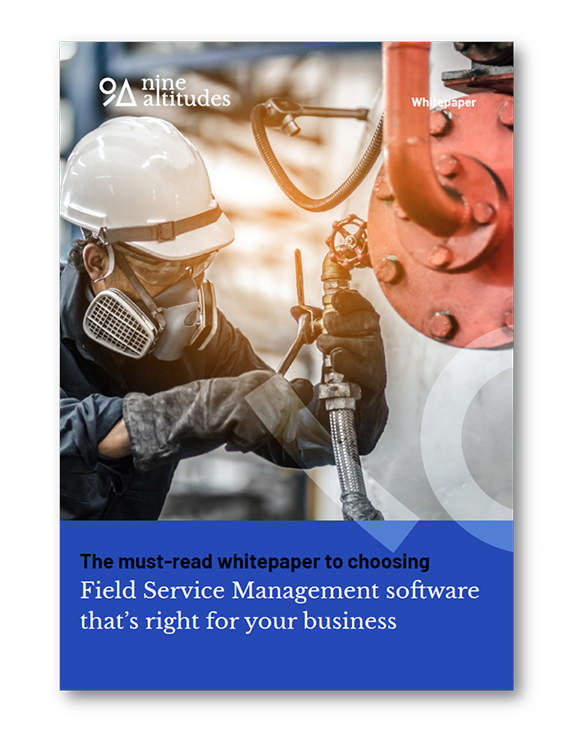
Continue reading in our "The must-read whitepaper for choosing Field Service Management software that's right for your business".
For manufacturing companies, Dynamics 365 Field Service is more than just a tool for managing service tasks. It’s a strategic enabler for sustainability, helping reduce emissions, extend asset life, minimize waste, and optimize resource use. By integrating field service with your broader manufacturing and ERP systems, you create a connected, efficient, and greener service operation that supports your long-term business and environmental goals.
In this white paper, we look at what you can expect from a field service management solution, which features are important, and how to approach the search.
.png&width=640&format=webp)
In all honesty, your business needs Marketing Automation if you are determined to survive this digital era. It makes sense that marketers welcome the change with open arms.

To stay ahead in the world of field service innovations, our customer Joulz showed tremendous enthusiasm to participate together with us in the product preview of Copilot in Dynamics 365 Field Service.
Collecting data is one thing. But what you do with the data is imperative for the value they bring.
Find out and re-create the success
In the world of Field Service, your First Time Right (FTR) rate is a game-changer.
We are participating in the early preview of Microsoft's Copilot in Dynamics 365 Field Service
It has only been a few months since Microsoft introduced its first Copilots. In this article, we explore the Copilots currently available in Dynamics 365 CE.

Periodic maintenance—perhaps you see it as just another task in your daily operations. But what if it could be more? What if your maintenance strategy became the key to higher customer satisfaction, reduced costs, and extended asset lifecycles?
Field Service Management Software optimizes your company's field service with real-time insights and efficient planning for maximum service.
For technical services companies, asset diversity and contract complexity are only growing. Copilot helps turn that complexity into a strategic advantage
You can't just pull data from Dynamics to Power BI. You have to deal with your cloud environment, take other sources into account, and more. We are ready to guide you and make it easier.
Discover how AI-powered scheduling in Microsoft Dynamics 365 Field Service helps you plan smarter, react faster, and deliver better service with less manual effort.
Read our five tips on how to decrease your operational costs with Field Service Management software

Digital business transformation is what we do. Making sure organizations are ready to deliver for the end customer of today and those of tomorrow. Thanks to our industry expertise, we are able to combine speed and quality into your digital transformation journey.